










Introduction
Language is a living entity, constantly evolving and adapting to the needs of its speakers. Among the fascinating terms that have emerged over time is “incfidelibus.” At first glance, it may seem like just another complex word in Latin, but there’s more beneath the surface. If you’ve ever stumbled upon this intriguing term, you’re not alone. Many people have questions about its origins and meaning.
In this post, we’ll unravel the mysteries surrounding incfidelibus. We’ll explore where it comes from and what it signifies while clearing up common misunderstandings along the way. Join us as we dive into a world where words hold history—and discover why understanding language roots matters more than ever!
The Origin of the Word Incfidelibus
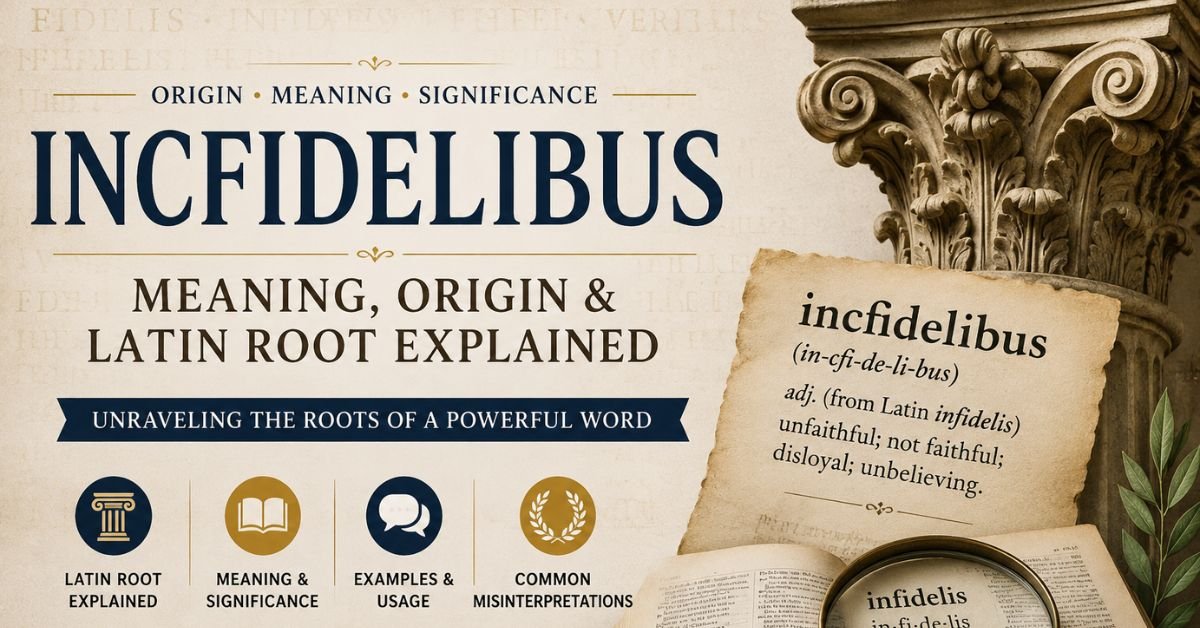
The term incfidelibus has its roots in Latin, specifically from the word “infidelis.” This original form translates to “unfaithful” or “disloyal.” Over centuries, the meaning evolved, but the essence of betrayal remained.
In early texts, infidelity often referred to religious disloyalty. People who strayed from their faith were labeled as unfaithful. The implications ran deep in historical contexts where belief systems shaped society.
As language progressed, variations of infidelis emerged across different cultures and languages. Yet, incfidelibus retains a strong connection to its Latin ancestor.
Understanding this origin enriches our grasp of modern interpretations. It connects us to a lineage of thought that spans thousands of years and reflects changing values over time.
The Meaning and Significance of the Latin Root
The term “incfidelibus” derives from the Latin word “infidelis.” This root translates to “unfaithful” or “not faithful.” It carries a weight of meaning that extends beyond mere disloyalty.
Historically, this concept often pertained to religious contexts. Those labeled as infidels were seen as outsiders, challenging established beliefs. Such associations carry significant cultural and emotional implications.
In modern usage, understanding this Latin root helps clarify discussions around loyalty and faithfulness. The nuances embedded in “incfidelibus” bridge ancient concepts with contemporary language.
Recognizing these connections enhances our appreciation for the evolution of words. Each syllable holds stories that resonate through time and culture, reminding us how language shapes our understanding of fidelity and trust.
Examples of How
Understanding the usage of incfidelibus can enhance communication. It often appears in discussions about loyalty or fidelity.
For example, consider a debate on ethical behavior. Someone might say, “The incfidelibus actions of the protagonist reveal deeper moral flaws.” This illustrates betrayal while invoking a historical context.
In literature, authors may describe characters as incfidelibus to emphasize their disloyalty. A villain’s treachery can be highlighted by using this term.
Moreover, in everyday conversations surrounding trust issues—be it personal relationships or professional settings—this word adds depth. “His incfidelibus tendencies raised red flags during our partnership,” could succinctly capture concerns about reliability.
Using such terms enriches dialogue and invites curiosity into their meanings. Familiarity with words like incfidelibus encourages thoughtful exchanges and enhances understanding among speakers and listeners alike.
Common Misinterpretations of
Many people mistakenly associate incfidelibus with betrayal or disloyalty. However, the term’s origins lie in a more complex understanding of faith and fidelity.
Another common misinterpretation is the belief that it relates only to religious contexts. While it certainly has roots in religious discourse, its applications extend beyond that sphere.
Some individuals confuse incfidelibus with similar-sounding words, leading to further misunderstandings. This can dilute its intended meaning and impact when used in conversation or writing.
Furthermore, there’s a tendency to oversimplify its implications. Words like “unfaithful” fail to capture the nuance present in incfidelibus.
Recognizing these misconceptions can enhance our appreciation for this rich term and how we use it within various discussions.
The Importance of Understanding the Roots of Words
Understanding the roots of words enriches our grasp of language. It unveils connections between terms, revealing their shared histories and meanings.
When we dig into etymology, we discover insights that enhance comprehension. For example, knowing the Latin root helps us connect “incfidelibus” to notions of faithfulness or loyalty.
This knowledge is not just academic; it informs our use in everyday conversations. Recognizing a word’s origin can clarify its nuances and intended impact.
Moreover, exploring roots fosters curiosity about language evolution. Words evolve over time, influenced by culture and society.
An appreciation for these origins also sharpens critical thinking skills. When dissecting unfamiliar words, understanding their components becomes essential for effective communication.
Other Words with Similar Latin Roots
Exploring the Latin roots of “incfidelibus” reveals a treasure trove of related words. Many English terms derive from this rich linguistic heritage.
Take “infidelity,” for instance. It shares the same root and conveys themes of unfaithfulness or betrayal, often in romantic contexts.
Another interesting word is “fidelity.” This term embodies loyalty and faithfulness, highlighting the stark contrast to its negative counterpart.
Then there’s “confide,” which invites trust into relationships. It emphasizes reliance on others while hinting at vulnerability.
Consider “fiduciary.” This term relates to a person who manages assets with trust and confidence, echoing back to those deep-rooted principles of fidelity and belief.
Each word carries nuances that enrich our language and understanding of human connections.
Conclusion: Using Incfidelibus Correctly in Everyday Language
The term incfidelibus can add depth to your vocabulary and discussions. Understanding its Latin roots helps clarify its meaning and significance. When using this word, it’s important to capture the essence of what it represents—unfaithfulness or disbelief.
In everyday conversations, try incorporating incfidelibus when discussing themes of loyalty or betrayal. This can elevate a discussion from mundane to profound, offering a historical perspective that enriches language use.
As with any specialized term, it’s crucial to be mindful of context. Using incfidelibus appropriately ensures you communicate effectively without creating confusion among listeners unfamiliar with the term’s background.
By embracing words like incfidelibus in your daily interactions, you’re not just expanding your vocabulary; you’re connecting with linguistic history while inviting others into a richer dialogue about faith and fidelity in various contexts.
You might also like Songoftruth Org: Guide to Growth and Inspiration